
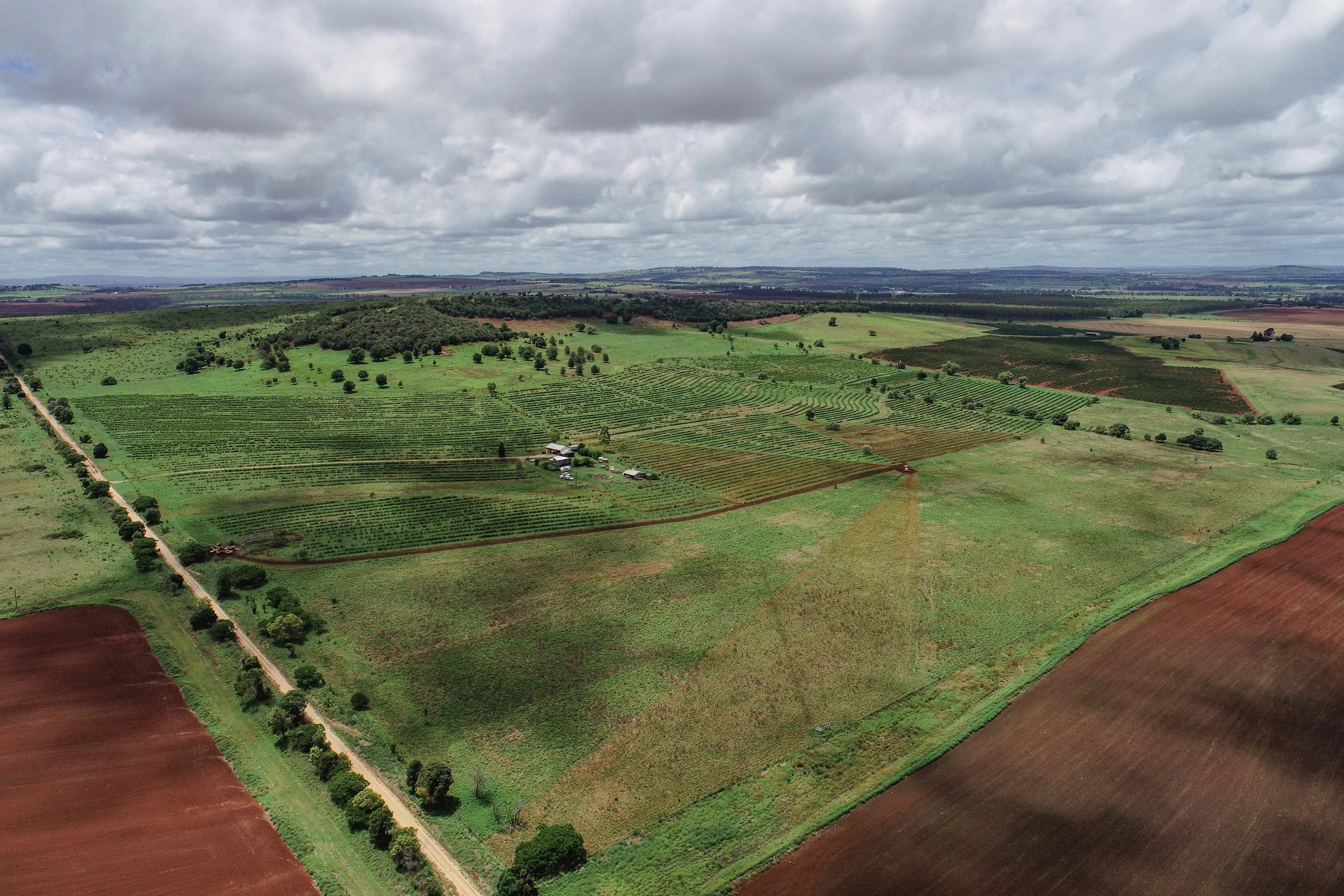
The Viner Carbon Project, owned and managed by Jeff Bell, has achieved successful issuance of ACCUs under the ACCU Scheme, validating measurable increases in soil carbon across a 61-hectare grazing operation in Queensland.
Jeff’s decision to get started and get baselined has been validated by the results, demonstrating the value of taking action and committing to the process.
Jeff Bell has been issued 2,509 ACCUs, reinforcing the value of getting started and getting baselined rather than waiting on the sidelines.
26 February 2026: The Viner Carbon Project, owned and managed by Jeff Bell in Queensland, has reached a significant milestone with the issuance of 2,509 Australian Carbon Credit Units (ACCUs) under the Australian Government’s ACCU Scheme.
Developed in partnership with AgriProve, the project covers 61 hectares and reflects Jeff’s commitment to regenerative land management. The ACCUs issued validate measurable increases in soil organic carbon achieved through practical, hands-on management decisions refined over several years.
When Jeff took on the property, it was divided into four main paddocks with limited water infrastructure. He has since transformed it into a 35-paddock rotational grazing system connected by a lane network linking all paddocks to the cattle yards. The subdivision required 9.7 kilometres of single-wire electric fencing, two 5,000-litre cup-and-saucer water systems and targeted investment in posts, water lines and an energiser for a total infrastructure outlay of approximately $13,000.
“All the money I’ve spent on fencing and water, I would have spent anyway, it’s just what you need to manage country properly,” said Jeff Bell. “The only real cost for the carbon project was the initial soil testing, and the return on that has been huge. Once you start managing this way, you can’t go backwards.”
Jeff runs around 80 head of cattle and up to 130 head depending on seasonal conditions across the property alongside his part-time role as a diesel fitter. He targets stock densities above 50 head per hectare to achieve grazing impact. His rotation is flexible rather than fixed - adjusted from daily moves to multi-day rests depending on seasonal conditions, pasture response and time of year. He uses no chemicals on cattle, instead providing free-choice minerals including potash, dolomite, dicalcium phosphate, diatomaceous earth, sulphur, salt and biochar. Herbicide use is limited strictly to spot-spraying lantana as a last resort.
Each year, Jeff broadcasts a multi-species seed mix across the property, typically in spring, followed by cattle at high density to trample seed into the soil. In 2025, the mix included 13 primary species – lucerne, white clover, sunn hemp, mammoth turnip, tillage radish, forage radish, silk sorghum, Rhodes grass, stylo, Wyn cassia, evening primrose, chia and lab lab – alongside smaller quantities of sunflower, garlic chives, comfrey, yarrow and a bug attractant mix.
Jeff also applies at least one round of foliar biological amendments each year, with the 2025 application including molasses, fish hydrolysate, kelp, humic acid, fulvic acid, urea, brewer’s yeast and a biodynamic preparation. He deliberately varies both the mix and the timing each season, reflecting a management philosophy shaped by the RCS Grazing for Profit course.
“If you never try it, you’ll never know,” Jeff said. “I try to never do exactly the same thing at the same predictable time every year. Some species work, some don’t, but the ones that do establish themselves and start spreading. You dig a shovel into some of these paddocks now and the soil is just beautiful.”
These combined practices have driven measurable improvements in carrying capacity from a benchmark of 52 stock days per hectare per 100 millimetres of rainfall to 59 while supporting the emergence of native legumes, improved pasture diversity and visible soil structure improvement across the property. Chicory and plantain have self-seeded and spread without replanting, and leucaena shrubs sown years earlier are now establishing from hard seed reserves in the soil.
“I’m not focused purely on making a profit. I’ve found that when I focus on managing the land well, that’s actually when things go best,” Jeff said. “The carbon project has given me a way to measure the results and reinvest back into the property.”
Jeff plans to use proceeds from the sale of his ACCUs to fund earthworks and natural sequence farming contours designed to better capture and spread water across the landscape, further strengthening the long-term productivity and resilience of the property.
“There was a bit of pushback in our local cattle producer group. Some people thought the property was too small for a soil carbon project,” Jeff said. “But I just decided to get started. The minimum project size has since gone up, so I’m glad I didn’t wait around. AgriProve made the whole process hassle-free, and the team have always been good to deal with.”
Quotes attributable to AgriProve General Manager, Kieren Whittock:
“The Viner Carbon Project is a great example of what happens when a producer simply decides to get started,” Mr Whittock said. “Jeff has taken a 61-hectare property, invested around $13,000 in fencing and water infrastructure, and applied the kind of disciplined, adaptive grazing management that delivers real results - not just in carbon, but in pasture diversity, carrying capacity and overall farm resilience. He’s a diesel fitter who farms part-time, and he’s achieved outcomes that many full-time operations would be proud of.”
“The 2,509 ACCUs issued validate what Jeff has achieved since he decided to get baselined.. Jeff’s results are proof that taking that first step and committing to the process delivers real outcomes.”
“At AgriProve, we take a soil-first approach because productivity and carbon are inseparable. When soils improve, pasture utilisation improves, stocking rates lift sustainably, and businesses become more resilient. Jeff’s results are proof of that.”
Media contact: Daniel Wortmann 0448 187 650 [email protected]