
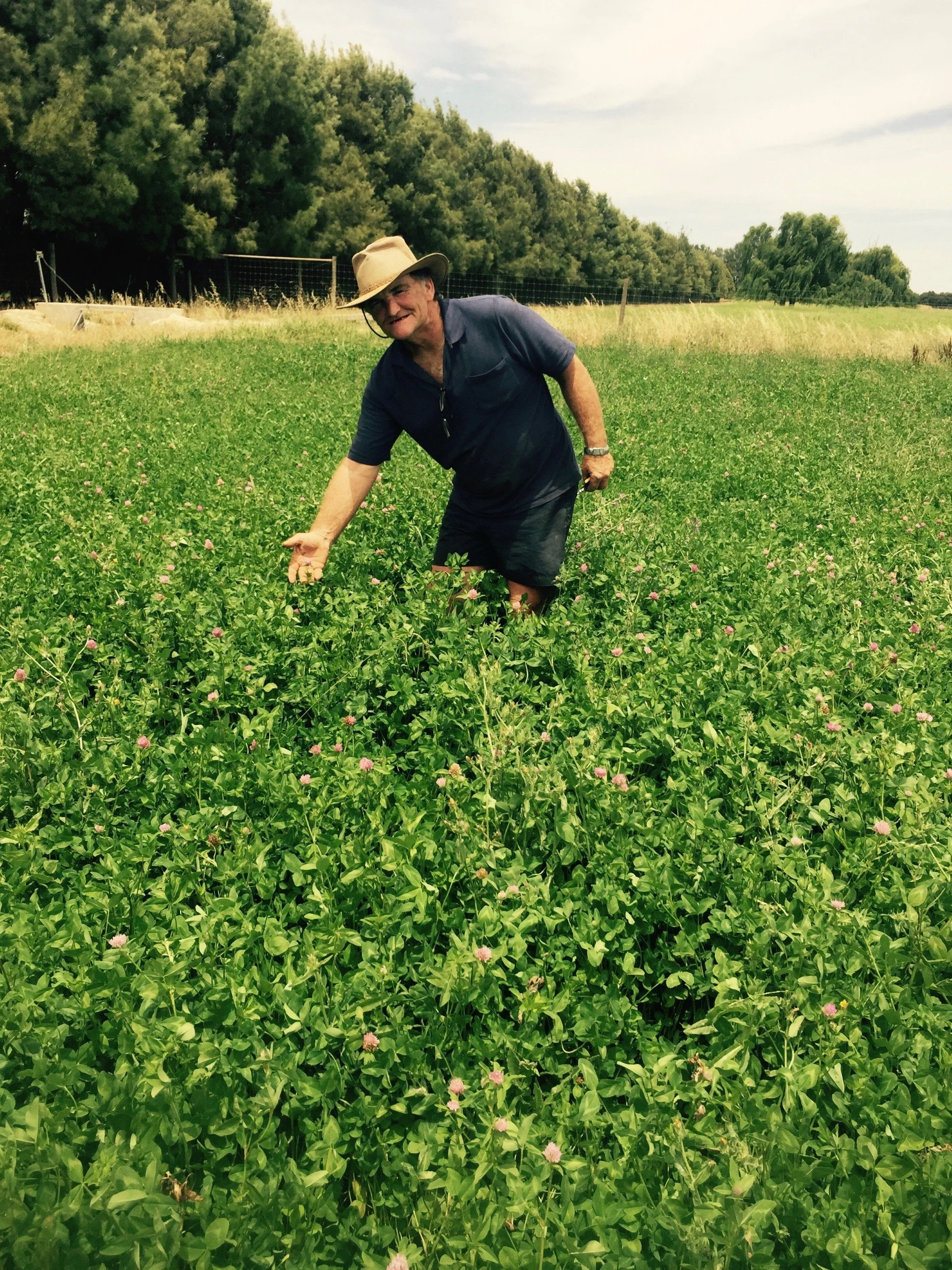
A book set Chris Almond on a seventeen year soil building journey. The carbon credits came later, on top of a dairy that was already more profitable.
Back in 2009, Chris Almond was looking for ways to make his dairy more profitable. What he found was a book by renowned soil scientist Dr Arden Andersen, and it set him on a path he is still walking. As it turns out, Andersen is also one of the soil scientists LawrieCo founder Adrian Lawrie studied under, along with Neil Kinsey, Elaine Ingham and Gary Zimmer. Chris and the LawrieCo team were working off the same thinking long before they met.
The idea that stuck was simple. Lift the fertility of the soil and you lift the mineral density of the pasture growing in it, which means more milk in the vat and healthier animals.
Small changes, compounding results
The changes started small. First came mineral balance, getting the ratios right rather than simply adding more. Then introducing and stimulating soil biology. Later again, foliar spraying. Biomass production stayed much the same. Feed quality did not. A similar tonnage was coming off the paddocks, but it carried far more nutrition, and the enterprise was more profitable for it.
Soil that breathes
With mineral balance restored and biology functioning, the ground itself began to behave differently. The soils breathe now, and take water in far more efficiently, so rainfall and irrigation go further and the growth window has stretched out with them.
“The money I’ve made from the carbon has been an absolute life saver. After a couple of tough years it’s given me some cream, and that’s made a big difference.” Chris Almond
He was already building humus
Chris had known all along that building fertility also meant building humus. So when LawrieCo raised the idea of a soil carbon project, he knew what work was required to improve his soil. As Chris saw it, it was a no-cost opportunity. The same soil restoration that lifts production on the dairy could also earn a second income from carbon credits.
The proof in the ground
Within 18 months of baselining the property, Chris was retested. AgriProve handled the testing, measurement and paperwork. The results showed a significant gain in soil carbon, and 1,008 credits followed. Chris continues to work closely with the LawrieCo agronomy team to push profitability further on the dairy, now with carbon credits alongside it. The book started it. The soil has done the rest.
Six actions that work together
The LawrieCo Soil Carbon Regeneration System is built on six actions. The best carbon building comes when all six are running together, because each one makes the others work harder. They also serve as a way of troubleshooting a paddock: when carbon is not moving, one of the six will usually explain why. On one farm it is a mineral imbalance, on another it is biology that has been knocked around, or residues sitting on top instead of breaking down.
Few farms take on all six at once, and there is no need to. Some of the actions, done properly, beats none of them. For Chris, minerals were the place to start: getting the ratios right, calcium to magnesium and on through phosphorus, nitrogen, sulphur and the trace elements, gave everything else something to work with, because carbon builds faster in a mineral balanced soil. He has added the others as he has gone, so more of the system is pulling in the same direction each season.