
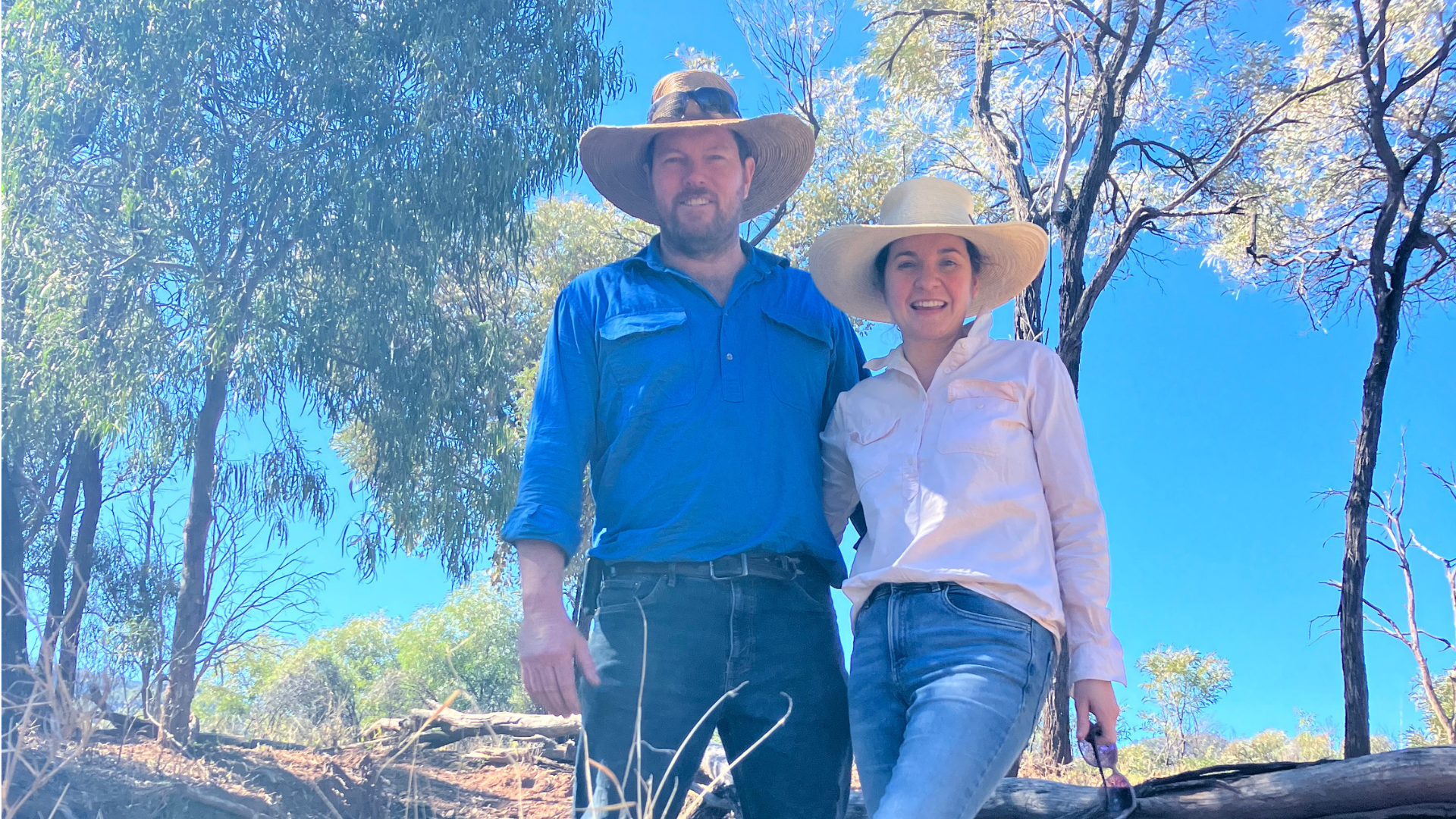
The Peart family has completed its first sale of Australian Carbon Credit Units (ACCUs), selling 10,000 units, about a third of those issued across their Jones and Blewett Carbon Projects in Queensland, for $37.50 each.
The sale allowed the family to recoup the baseline establishment costs of the Jones and Blewett Carbon Projects and pay-down debt on their property, while retaining the balance of their credits to sell progressively over the years ahead.
The Peart family described the sale as “seamless” and was completed within about a week of the decision to sell, and encouraged other landholders improving their soils to consider the same opportunity.
23 July 2026: The Peart family, who own and manage the Jones and Blewett Carbon Projects in Queensland, have completed their first sale of Australian Carbon Credit Units (ACCUs), converting measured improvements in soil carbon into a $375,000 return.
The family sold 10,000 of the 30,145 ACCUs issued across their two projects at $37.50 per unit. Developed in partnership with AgriProve, the projects sit within the family's wider 4,800-hectare grazing operation, where a focus on rotational grazing, water infrastructure and pasture improvement has driven measurable gains in soil organic carbon.
For the Peart family, the sale was as much about sound business management as it was about carbon. Selling roughly a third of their credits allowed them to recoup the baseline establishment costs of the Jones and Blewett Carbon Projects, pay down the mortgage on their property, and manage the income across financial years while keeping a majority of their credits in reserve.
“It was good to recoup the baseline costs of getting the projects up and running, that's always a good feeling,” said Rowan Peart. “And it's meant a bit less interest to pay on the property mortgage now too.”
“I was happy with the price, and rather than wait and sell everything at once, we'd prefer to sell a portion over a couple of years. It's about managing the risk and keeping some powder dry.”
The family found the sale process straightforward. Through engagement with an independent specialist carbon broker, the transaction moved quickly once the decision was made.”
“Once I decided to pull the trigger, it was about seven days, a very painless operation,” Rowan said. “I just spoke to the team and the next thing the money arrived a week later. Seamless and easy.”
Rowan said seeing the result as a dollar figure rather than a number of credits brought the achievement home.
“I like looking at dollar signs,” he said. “Everyone's got an overdraft that goes up and down through the year, and it's a great feeling to see a big chunk disappear off the top. Only good things.”
Asked what he would say to other landholders weighing up starting a soil carbon project, Rowan kept it simple.
“If you're doing the right things and putting carbon in the soil, that's only a good thing,” he said. “I can't see why more people wouldn't take advantage of it. I'll certainly be telling other farmers to look into it.”
Quotes attributable to AgriProve General Manager, Kieren Whittock:
“The Peart family’s sale is another example of what the soil carbon method delivers when rigorous measurement meets disciplined management,” Mr Whittock said. “Outcomes like this are now occurring with greater frequency as projects reach maturity and ACCUs are delivered.”
“At AgriProve we take a soil-first approach and give landholders the flexibility to manage their own country. When good farming and robust measurement come together, the result is healthier soils, more resilient businesses, and credits that can be turned into real income.”